|
Fashion & Costume Design in Quarter Scale
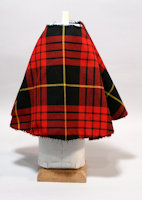
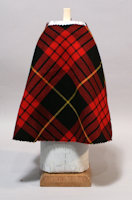
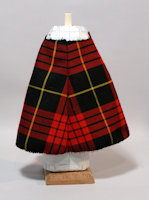
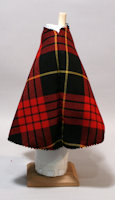
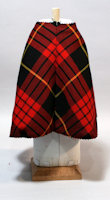
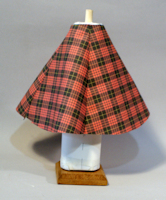
by Don McCunn Prototyping in Quarter ScalePrototyping in quarter scale can be used in a variety of ways. Two examples are shown here. The first shows what happens when the patterns are laid out in different directions on fabric that has a design such as the plaid in this example. The second example illustrates how prototyping can be used to determine how to construct a garment to achieve a special visual effect. ContentsPattern LayoutQuarter-scale protoyping is used in this example to determine the optimum appearance of this fairly expensive plaid imported from Scotland. By using a waist-to-floor Mini-Me form the only sewing involved to do this prototyping was to sew the side and center front & back seams.
Scaling Fabric
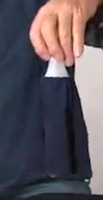
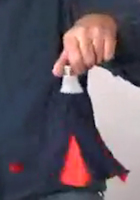
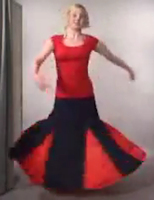
When the fabric is not a solid color but has a design such as this plaid, an image of the fabric can be scaled down and printed. This can be done using a desktop printer with either iron-on-transfer paper or printable fabric sheets. The drape and color of the quarter-scale printed fabric will most likely be different. But it is a way to determine what the proportions of the fabric design will look like in a full size garment. Prototyping ConstructionBack in 2008 before I had developed Mini-Mes I was showing people in my "Introduction to Pattern Design" class how they could use a wine bottle to simulate the quarter-scale version of a woman's shape to prototype design ideas. One of my models for the class was a dancer who asked me to make a skirt that would be one color when she was standing still and a second color when she moved. It was a challenge to figure out the construction details so that the red gore would be completely hidden when she was standing still. I eventally came up with the idea of zigzagging the red gores to the seam allowance of the skirt rather than stitching the gore to the usual seam line. But it did take several attempts before I came up with this solution. Once I had the construction issue resolved I was ready to create the full size version which worked exactly the same as the quarter-scale prototype.
Copyright © 2023 by Don McCunn |